All insights

·

Daniel Asper
Track Client Consent Before You Capture
Capture and track each client's consent status directly in Continuum, so you can confirm consent is documented before transcribing a call or meeting.
Under PIPEDA, consent to record or transcribe a conversation has to be meaningful and documented. Most advisors handle that with a sentence at the start of the meeting and a memory of having said it. Continuum now gives you a place to record consent for each client and a clear signal of its status before you capture.
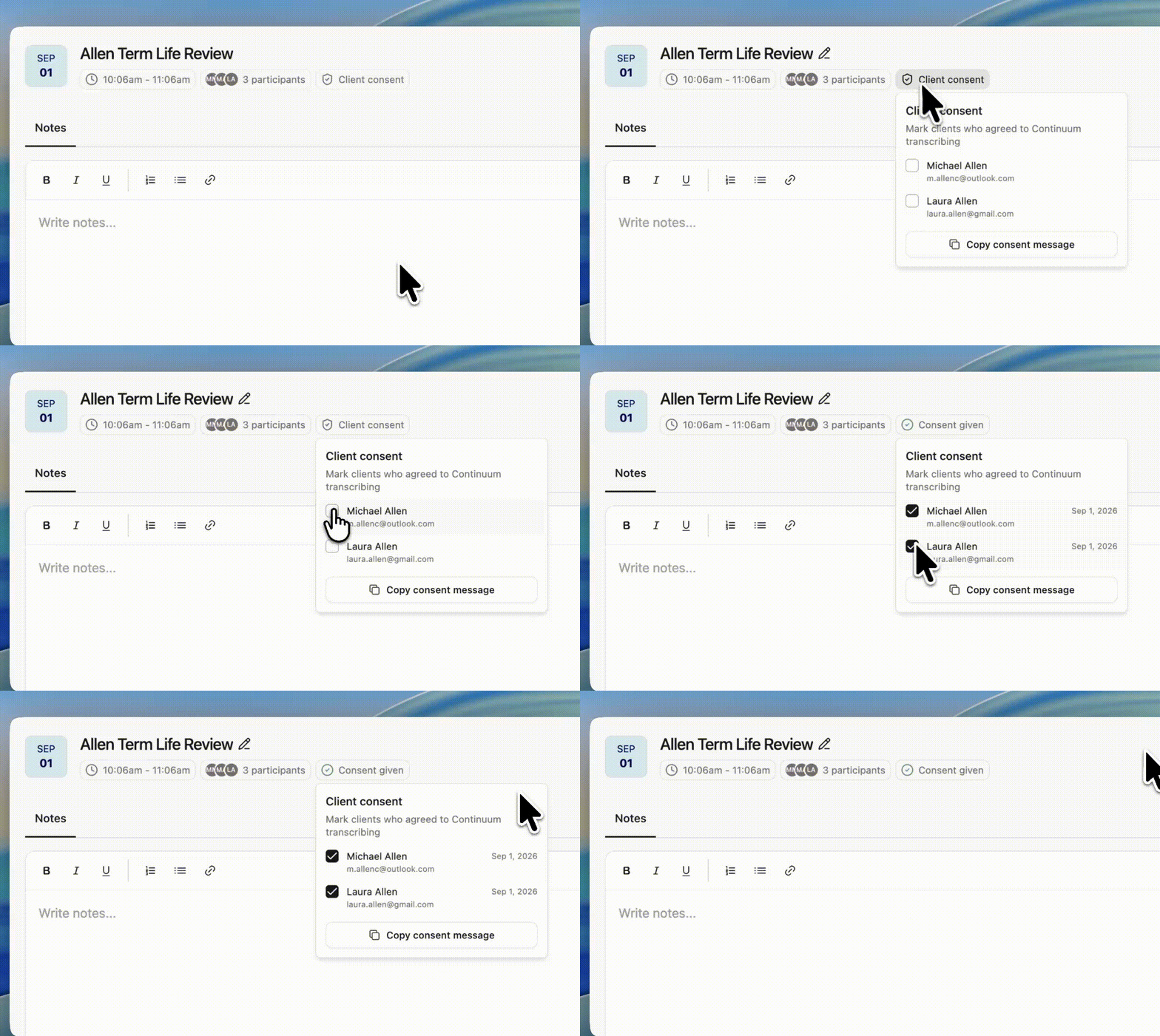
How it works
Each client has a consent status you record directly in Continuum, and every meeting shows whether consent is documented for the people attending. Record the client’s agreement when you first discuss it, and the status is there the next time you open a meeting with them.
When you start a capture, Continuum surfaces the consent status for the people in the room, so the check happens at the moment it matters. The result is a record that shows not just what was said, but that the client agreed to it being captured.
Why this is the compliance question that matters
There is a persistent idea that a visible bot in the attendee list is itself a form of consent. It is a disclosure, not an audit trail. The questions a regulator asks are different: can you prove the client consented, can you control when capture starts and stops, and do you keep only what you need. Consent tracking answers the first. Botless capture, with pause and stop controls, answers the second. Streaming audio for transcription without ever recording it answers the third.
Built into the record
Consent status is logged on the meeting itself, alongside the transcript, summary and tasks, and it is part of the audit trail your compliance team can pull on demand. For dealer networks rolling Continuum out across hundreds of advisors, it standardizes a step that used to live in each advisor’s head.
Daniel Asper
Daniel Asper is CEO and co-founder of Continuum.